Fall Cleanup Timing in Hartford County: When to Schedule
Late October through mid-November is the cleanup window. Why early sweeps need a second pass, why late ones risk snow mold, and when to book.
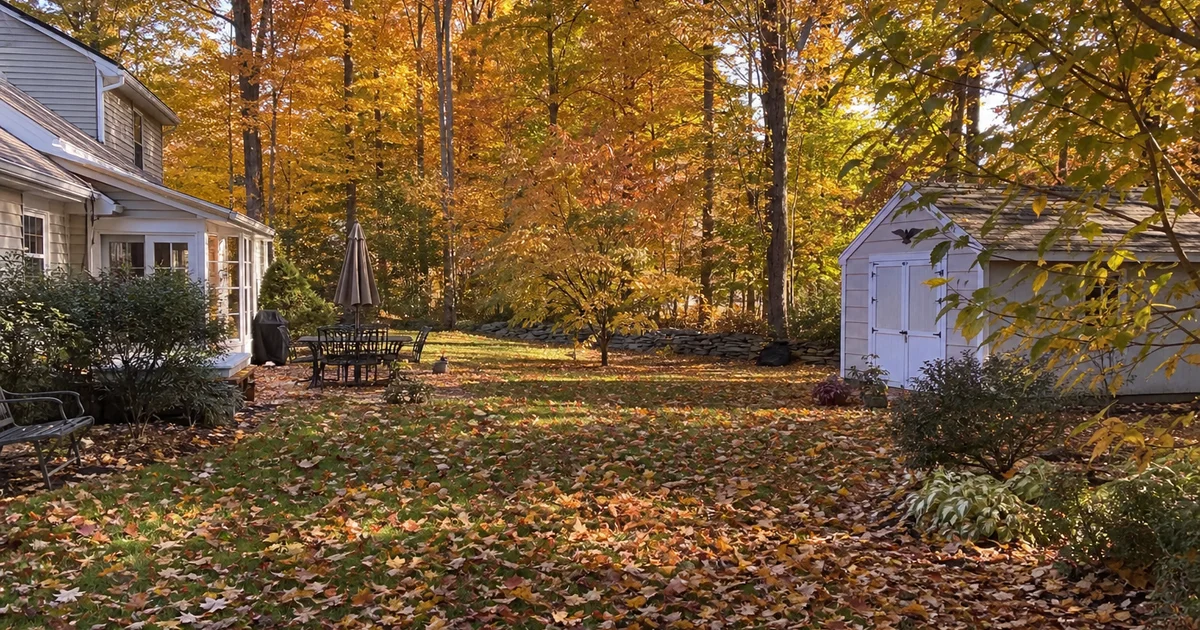
Timing a fall cleanup is a balancing act between two bad outcomes. Go too early and the late-dropping oaks cover the lawn again within weeks. Go too late and the first snowfall traps a blanket of wet leaves against the soil, creating the perfect conditions for snow mold that kills the turf underneath.
The goal is to clear the majority of leaf drop in a single efficient window, and that window is narrower than most property owners realize.
The Target Window: Late October Through Mid-November
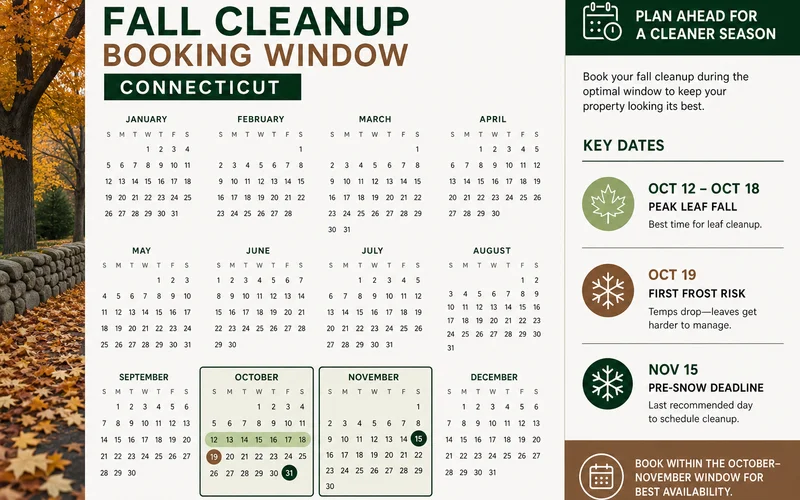
The Connecticut River Valley follows a dual-wave leaf drop pattern. Birch and maple trees shed their canopies throughout October. Oaks and beeches hold their leaves longer and release them in early November.
The ideal cleanup window straddles this overlap. A primary sweep between Halloween and the second week of November catches the bulk of the maple drop while snagging the early oak leaves before the ground freezes.
Industry data from 2026 confirms that 39 percent of all leaf removal requests in Hartford County happen in November. That concentration reflects the reality of the local tree canopy and freeze timeline.
A November sweep clears the maple drop and beats the first snowfall, making it the most cost-effective timing for standard lots.
Why an Early Sweep Costs You Double
Clearing leaves before mid-October guarantees a second visit. Late-dropping oaks will blanket the lawn again within two to three weeks, negating the first effort entirely.
Heavy layers of wet oak foliage block sunlight and trap moisture against the root system. That trapped moisture creates conditions for crown hydration damage during the first freeze-thaw cycle. A premature sweep doubles the required labor, disposal fees, and total cost.
Late-season risks of clearing too early:
- Maples shed a second wave after the initial pass.
- Oaks dump a thick mat over freshly cleaned grass.
- Trapped ground moisture damages roots during the first freeze.
- You pay for two visits instead of one well-timed sweep.
Waiting until the maples are entirely bare before scheduling the first machines is the most cost-effective approach.
Why Waiting Past Mid-November Invites Damage
The other extreme is equally destructive. Historical weather data places the region’s average first measurable snowfall around November 9. Early snow trapping a layer of wet leaves against unfrozen ground creates the exact environment where Typhula blight, commonly called gray snow mold, thrives.
This fungal disease produces straw-colored dead zones that require spring reseeding to repair. Pink snow mold poses an equally serious threat across the Connecticut River Valley. Both diseases are far more expensive to fix in spring than to prevent in fall.
Consequences of delaying past the first snow:
- Gray and pink snow mold spread rapidly under the leaf-snow layer.
- Dead turf patches require spring overseeding and additional fertilization.
- Frozen, matted leaves are extremely heavy and difficult to remove.
One Visit or Two: Matching Service to Your Tree Canopy
The decision depends on the species and density of tree cover on your lot.
| Tree Cover Level | Recommended Visits | Timing Strategy |
|---|---|---|
| Few trees (mostly maples) | Single visit | Early to mid-November |
| Heavy canopy (oak and maple mix) | Two visits | Late October and mid-November |
| Severe load (large mature lot) | Three visits | Mid-October, early November, late November |
Based on 2026 market data, maintaining an average local lawn of 9,500 square feet costs roughly $264 per cleanup visit. A staggered approach ensures the turf receives sunlight between the early and late leaf drops without wasting money on unnecessary trips.
Book by September for the Best Slot
Crew schedules fill rapidly once back-to-school season begins. The best mid-November slots get claimed in September, and late callers get pushed to December when frozen leaves are harder and more expensive to remove.
Securing a spot early guarantees your property gets cleared before the critical snowfall deadline. Late December cleanups require heavy-duty vacuum equipment to pry frozen leaves off dormant turf, significantly increasing both crew time and cost.
The Final Autumn Visit
The last cleanup of the year includes more than leaf removal. Dropping the mower deck to 2 to 2.5 inches prevents grass blades from folding and trapping winter moisture. A slow-release winter fertilizer applied after this final cut feeds the root system beneath the frost line throughout dormancy.
Irrigation shutdown coordination rounds out the visit. Leaving hoses attached or sprinkler lines pressurized causes plumbing damage once temperatures drop.
The Landscaping Hartford fall cleanup service begins accepting bookings each September. Earlier scheduling means a better slot on the route and completion before the snow arrives.
Related Service
Learn more about Fall Cleanup Services
Ready to book? Get a free written estimate for fall cleanup services from our Hartford County team.
Visit the Fall Cleanup Services Page