When Should You Book Spring Cleanup in Connecticut?
Late March through mid-April is the ideal work window, but booking should happen in February. How Hartford County scheduling, weather delays, and pricing work.
The gap between when the ground thaws and when the grass starts growing is narrow. That window, typically late March through mid-April, is when spring cleanup needs to happen. But the booking window opens much earlier, and waiting until the snow melts to call a provider usually means paying more for a later slot.
For a full breakdown of the actual tasks involved, see our guide on what a spring cleanup includes.
The Work Window vs the Booking Window
These are two separate timelines, and confusing them is the most common scheduling mistake property owners make.
The work window depends on weather. Crews cannot operate on frozen ground or in saturated mud. Once soil temperatures hit 55 degrees and the frost lifts, the clock starts. In Hartford County, that typically happens in late March.
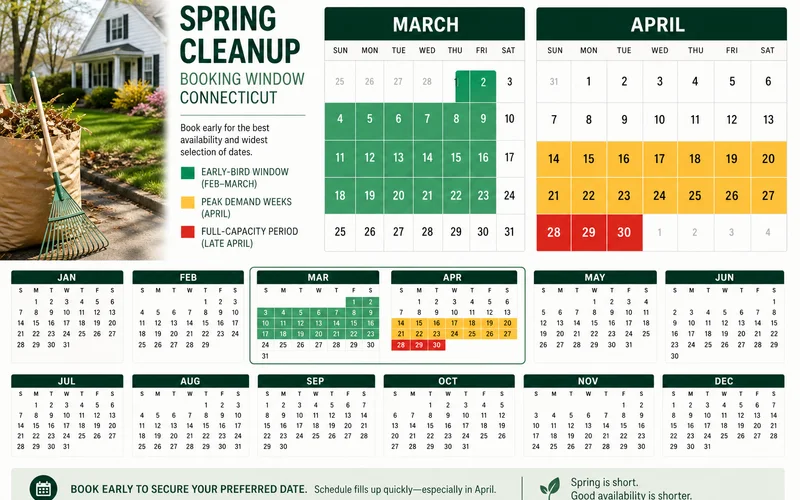
The booking window, however, opens weeks before any work begins. Established crews start filling their routes in February. By mid-March, the prime slots during the first two weeks of April are usually claimed.
Soil temperatures reaching 55 degrees trigger both forsythia blooms and crabgrass germination. That overlap is what makes early spring cleanup timing so critical.
How Timing Affects Pricing and Availability
The relationship between booking date and service quality is straightforward. Earlier bookings get better rates, preferred dates, and the crew that knows your property. Later bookings face surge pricing and less experienced operators.
| When You Book | Availability | Pricing Impact |
|---|---|---|
| February | High: preferred weeks open | Baseline rates locked |
| Early March | Moderate: some dates available | Normal rates apply |
| Late March | Low: pushed to late April | Surge rates possible |
| April | Minimal with established crews | Premium rates or no availability |
Average spring cleanup costs in the region run between $125 and $300 in 2026 for standard residential properties. Locking in a slot before the rush keeps you at the lower end of that range.
Weather Delays and Flexible Scheduling
Connecticut springs are unpredictable. The average last frost date for Hartford County falls between April 21 and April 30, and late March snowstorms can push the working calendar back by a full week.
We structure schedules using 7 to 10-day service windows rather than fixed dates. This built-in flexibility allows crews to shift around weather without triggering a full reschedule. The contract covers a window, not a single day.
Common weather factors that delay spring work:
- Late hard frosts: Freezes past mid-April prevent safe soil grading and dethatching.
- Saturated ground: Muddy turf cannot support heavy mower traffic without causing ruts.
- Wet debris: Soaked leaves are heavier, slower to remove, and can destroy the paper bags required by municipal recycling programs.
Crews wait for the ground to firm up slightly before starting machines. Patience at this stage prevents visible lawn damage that takes months to repair.
Smart Steps Before You Call
A little preparation in February saves time on the estimate and prevents surprise charges on the invoice.
Walk your property while there is still snow cover or right after it melts. Look for broken branches, ice-damaged shrubs, or areas where water pooled during the thaw. Providing these details upfront helps the estimator give you an accurate number on the first pass.
Follow these steps before signing any agreement:
- Walk the property in February: Note storm damage, fallen limbs, and drainage issues to describe during the estimate visit.
- Request a written estimate: Verbal phone quotes frequently shift when the crew arrives and sees the actual conditions.
- Confirm included tasks explicitly: Ask whether mulch application, bed edging, and dormant pruning are part of the base rate or quoted separately.
- Lock the date immediately: Once the contract is signed, that service window is reserved.
Hauling fees are another common surprise. Confirm whether yard waste removal is included in the total price or billed as a separate line item per truckload.
Properties That Benefit From Two Visits
Heavy-canopy lots surrounded by mature oak or pine trees often need a two-pass approach. The first visit handles the bulk debris, and the second catches material that was buried under the initial layer.
Splitting the work protects the turf from aggressive over-raking. The first pass clears the heavy material while the follow-up handles finer detailing once the underlying surface is visible.
Our Landscaping Hartford spring cleanup service starts accepting February bookings each year. Reaching out early is the simplest way to guarantee you get the best available slot for a thorough seasonal reset.
Related Service
Learn more about Hartford Spring Cleanup Services
Ready to book? Get a free written estimate for hartford spring cleanup services from our Hartford County team.
Visit the Hartford Spring Cleanup Services Page