When Should You Book Snow Plowing in Hartford?
August through early October is the booking window for reliable snow plowing in Hartford County. Why waiting until the first forecast is too late.
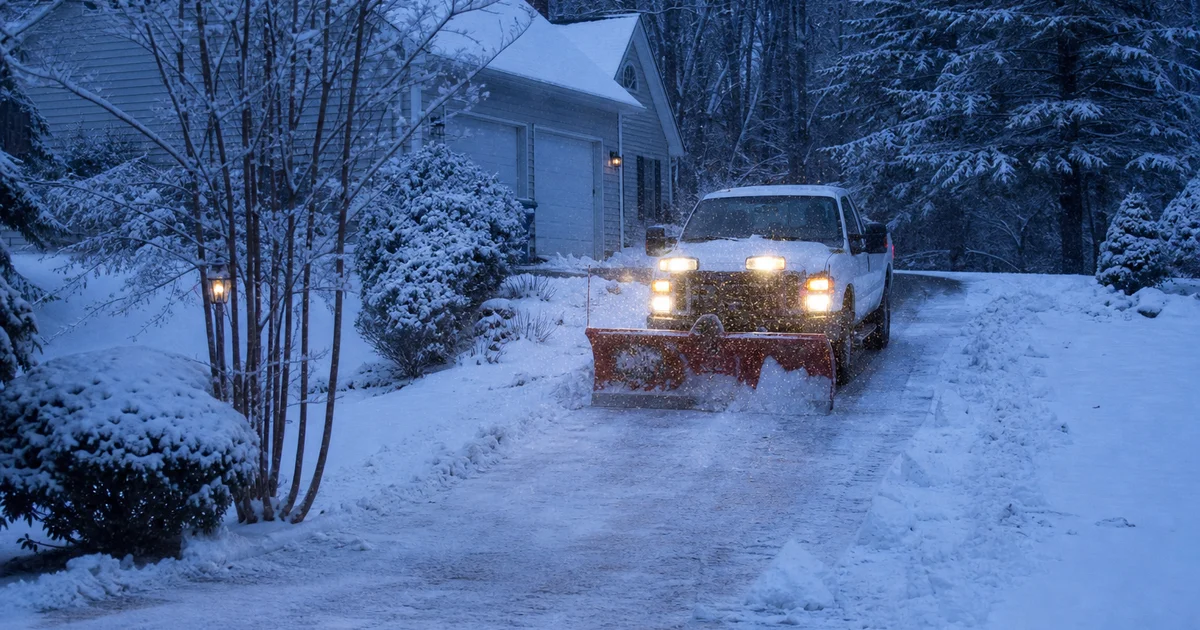
The worst time to look for a snow plowing crew is the morning you see the first flurry on the forecast. By that point, every established provider in the area has locked their routes and sized their equipment to match contracted properties.
Hartford County averages 40 to 50 inches of snow per year. That volume demands advance planning, especially for commercial properties where liability exposure starts the moment snow touches the pavement.
Our snow plowing and ice management team opens intake each August. Here is the timeline that determines whether you get reliable service or scramble for leftovers.
The Booking Calendar: Four Critical Windows
Commercial property managers typically start the process earliest. Retail centers, medical offices, and HOA boards begin requesting seasonal contracts in August because their liability clocks start ticking with the first accumulation.
Residential sign-ups follow in September and October, with the heaviest rush hitting right after Labor Day. By mid-November, the schedule is functionally closed for established crews.
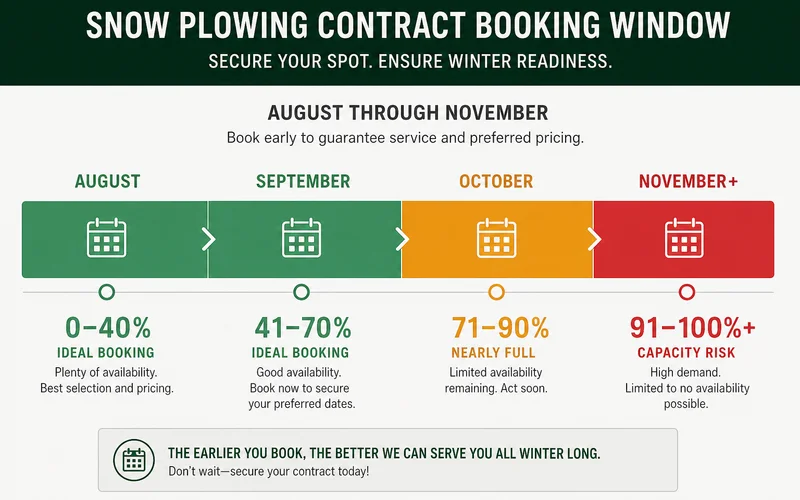
Here is how availability shifts through the booking season:
- August to Early September: Earliest contracts open. Best window for commercial accounts needing guaranteed seasonal coverage.
- Mid-September Through October: Prime booking period. Most residential and small commercial sign-ups happen here.
- Early to Mid-November: Final availability. Schedules are tight and route flexibility is minimal.
- Late November Onward: Reliable crews are full. New accounts get referred to smaller operators.
Towns like West Hartford legally require sidewalks cleared within 12 hours of a storm ending or sunrise. Missing a booking window does not exempt anyone from local ordinances.
Why Route Capacity Hits a Hard Ceiling
Snow plowing is fundamentally a logistics operation. Every truck follows a designed route that minimizes driving time between contracted stops. Adding a property mid-season means either disrupting an optimized path or sending a truck across town between visits, which burns fuel and delays every other client on the route.
By mid-November, professional operations have completed three critical steps:
- Built efficient routes around all contracted properties.
- Matched truck and driver capacity to the specific contracted load.
- Prioritized scheduling for commercial clients who need pre-dawn clearing.
These assignments are locked to handle the full season’s expected snowfall. New accounts after this deadline become marginal additions squeezed into whatever gaps remain.
Three Contract Structures Worth Understanding
Choosing the right pricing model depends on whether you value predictability or flexibility. Each structure handles the financial risk of winter weather differently.
Per-Storm Billing charges you each time the plow visits. For residential properties in 2026, this typically runs $45 to $80 per visit. A trigger depth, usually 2 inches, determines when service begins. Mild winters save you money; heavy winters cost more.
Seasonal Flat-Rate covers the entire winter for one predictable fee, generally $400 to $1,200 or more for residential homes. This model guarantees priority dispatch regardless of how many storms hit. Budget certainty is the main advantage.
Hybrid Contracts combine a seasonal base fee with per-storm overage charges if the winter brings an unusually high number of events. This model works well for commercial accounts that want baseline coverage with a cap on unexpected costs.
| Feature | Per-Storm | Seasonal Flat-Rate | Hybrid |
|---|---|---|---|
| Best For | Irregular or light use | Budget predictability | Commercial accounts |
| 2026 Residential Cost | $45 to $80 per visit | $400 to $1,200+ total | Base fee + overages |
| Dispatch Priority | Standard routing | Guaranteed priority | High priority |
For a detailed breakdown of how these contract types differ between driveways and parking lots, see our guide on residential vs commercial snow plowing.
Residential vs Commercial Timing
Commercial clients should be finalizing contracts by September at the latest. Slip-and-fall liability exposure is real, and the financial consequences of an uncleared lot far outweigh the cost of a seasonal agreement.
Homeowner sign-ups spread across September and October. The heaviest residential rush typically hits in early November when the first cold snap reminds people winter is coming. By then, the best route slots are already taken.
Landscaping Hartford opens commercial and residential snow plowing intake each August. Clients who sign early get maximum priority during heavy storm events.
Early-season clients receive top-tier dispatch priority during major winter storms.
If you are planning ahead, reaching out before October puts you in the strongest position. Waiting for the first forecast guarantees you are competing with every other property owner who put it off.
Related Service
Learn more about Snow Plowing & Ice Management in Hartford
Ready to book? Get a free written estimate for snow plowing & ice management in hartford from our Hartford County team.
Visit the Snow Plowing & Ice Management in Hartford Page