
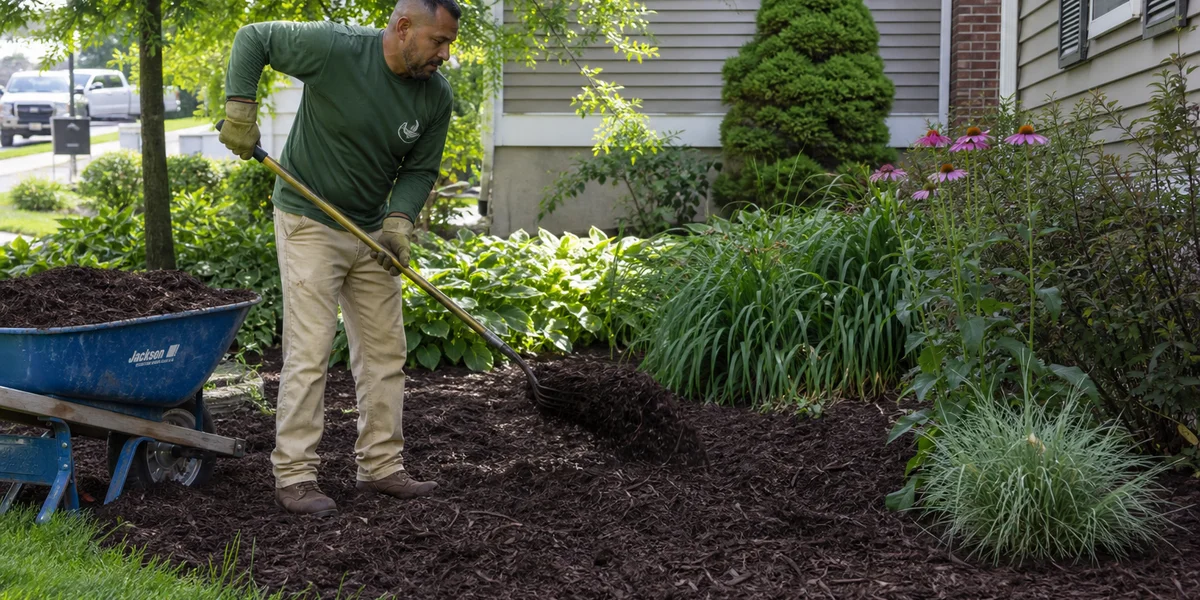
Mulching and Irrigation Services in Hartford
Annual mulch refresh and irrigation system coordination for Hartford County landscape beds and lawns.
What's Included in Our Mulching & Irrigation Services Service
Annual mulch programs that protect plant roots, suppress weeds, and retain soil moisture through Connecticut's hot summers. We coordinate with local irrigation contractors for seasonal startup, shutdown, and mid-season adjustments.
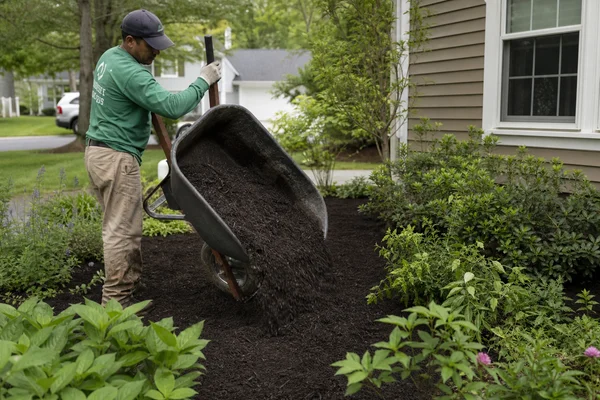
Mulch and irrigation are the two things that separate beds that look good in May from beds that still look good in August. Hartford’s summers bring stretches of 80-plus-degree heat with high humidity, conditions that stress shallow-rooted plants and encourage aggressive weed growth. A properly mulched bed with coordinated watering handles both problems at once.
Choosing the Right Mulch Material
Not all mulch performs the same. The material you choose affects how long the color holds, how effectively weeds are suppressed, and how much moisture reaches your plant roots.
Our standard is premium triple-shredded dark bark. This texture knits together into a tight mat that physically blocks sunlight from reaching the soil surface, which prevents dormant weed seeds from germinating. The finer shred also breaks down more slowly than single or double-shredded alternatives, meaning it holds its appearance longer between annual refreshes.
We carry several options depending on your property’s aesthetic and functional needs:
| Mulch Type | Color Retention | Weed Suppression | Visual Style |
|---|---|---|---|
| Triple-Shredded Dark Bark | Excellent | Excellent | Rich natural brown |
| Dyed Black Bark | Fair (fades faster) | Very Good | Bold, modern contrast |
| Natural Hemlock | Good | Good | Traditional New England |
Dyed black provides strong visual contrast for contemporary plantings but fades more quickly in direct sun. Natural hemlock is popular on properties near Elizabeth Park and throughout the West End, where the traditional aesthetic fits the neighborhood character. Dark bark is the best all-around performer for most properties in the area.
Why Depth Matters More Than You Think
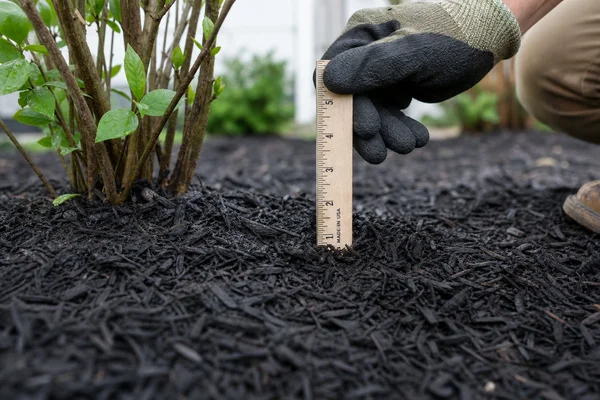
The correct application depth is 2 to 3 inches. This range is supported by research from the UConn Extension program and confirmed by our own field experience across hundreds of Hartford County beds.
Going thinner than 2 inches allows aggressive weeds like crabgrass and nutsedge to push right through the barrier. Going thicker than 3 inches creates a dangerous moisture trap around the root zone. Excess moisture against the base of shrubs and perennials is the leading cause of root rot, a fungal condition that can kill established plants within a single growing season.
The most common depth mistake is the “mulch volcano,” where material is piled high against the trunk of a tree or the base of a shrub. This trapped moisture softens the bark and invites boring insects and fungal pathogens into the wood. Our crews keep all material at least 4 to 6 inches away from trunks and plant crowns, leaving the root flare visible.
We measure depth at multiple points across each bed to ensure even coverage. On larger properties, this means checking depth at the bed center, near the edges, and around individual plant bases.
Bed Preparation Before Mulch Goes Down
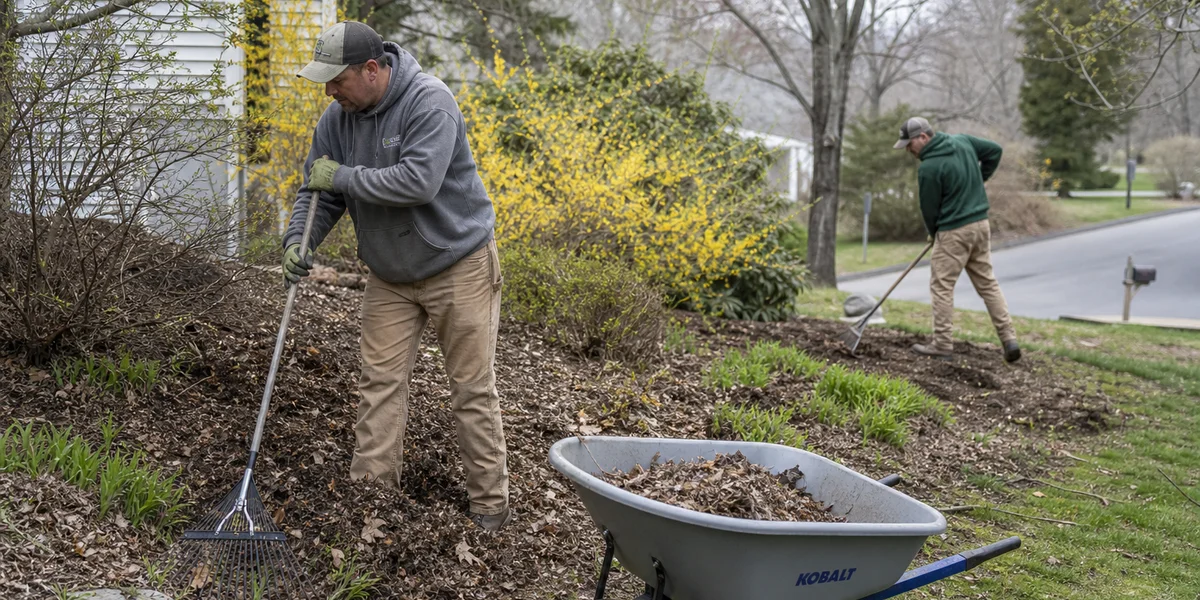
Spreading mulch over existing weeds is one of the most common shortcuts in residential landscaping. It hides the problem for a few weeks, but the weeds push right through the new material and the homeowner is back where they started.
Our mulch installation begins with full bed prep:
- Pull or treat all visible weeds in the bed.
- Re-cut the bed edge to restore the clean line between lawn and planting area.
- Remove dead plant material, fallen leaves, and any debris against the foundation.
- Check existing mulch depth and remove excess buildup if previous years were applied too thick.
Only after the bed is clean and properly edged does the new material go down. This prep work adds time to the visit, but it is the difference between beds that stay clean through summer and beds that look weedy again by July.
Coordinating Irrigation With Your Mulch Schedule
Timing your irrigation startup alongside the annual mulch refresh simplifies the spring maintenance calendar and ensures both systems are working together from day one.
We coordinate directly with local irrigation contractors for three seasonal touchpoints:
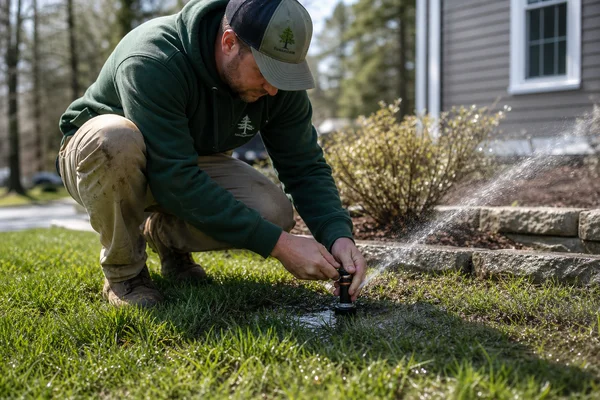
- Spring startup. Lines are pressurized, heads are checked for winter damage, and zones are tested. We schedule this for the same week as the mulch installation when possible.
- Mid-season adjustment. Sprinkler heads that have shifted, zones that are watering too heavily, or heads damaged by mowing are flagged during our regular maintenance visits and reported for repair.
- Fall shutdown. Lines are blown out before the ground freezes to prevent burst pipes and cracked fittings. Hartford’s freeze-thaw cycles can destroy unprotected irrigation components quickly.
The Case for Drip Irrigation Under Mulch
For beds with established shrubs and perennials, drip irrigation installed beneath the mulch layer is a significant upgrade over standard overhead sprinklers. Water drips directly into the root zone while the mulch acts as an insulating blanket that locks the moisture in place.
This combination reduces evaporation loss by 30 to 50 percent compared to overhead watering. The soil surface stays drier, which further suppresses weed germination. And because the water is delivered slowly at the root level, plants develop deeper, more resilient root systems.
The EPA WaterSense program reports that weather-based smart controllers paired with drip systems can save households up to 15,000 gallons of water annually. For properties with significant bed area, the long-term savings on water bills often pay for the drip conversion within two to three seasons.
Scheduling Your Mulch Refresh
The best time for annual mulching is mid-April through May, after the spring cleanup is finished and before the summer heat arrives. Applying mulch during this window gives the material time to settle and form its weed-blocking mat before peak weed germination season.
We serve properties across Greater Hartford including Newington, West Hartford, Wethersfield, Glastonbury, and Farmington. Call to schedule your bed measurement and get a written estimate for this season’s mulch refresh.
What's Included
- Premium triple-shredded dark bark mulch
- 2–3 inch standard depth
- Color and type options
- Irrigation system coordination
- Spring startup / fall shutdown service
Why Hartford County Chooses Us for Mulching
Premium Material Standard
Triple-shredded dark bark holds its color longer and breaks down slower than budget mulch. It knits into a tight mat that blocks weeds effectively.
Measured to the Correct Depth
2 to 3 inches is the proven range. Less does not suppress weeds. More suffocates roots. We measure at multiple points across every bed.
Full Bed Prep Before Mulching
Weeds are pulled and beds are edged before any material goes down. Mulching over weeds just hides the problem temporarily.
Irrigation Scheduling Handled
Spring startup, fall shutdown, and mid-season repairs are coordinated with our irrigation network so you are not managing two vendors.
The Mulching Process
Measure Beds
Calculate cubic yards needed at proper depth.
Material Selection
Dark bark, hemlock, dyed — your call.
Bed Prep
Weed beds and edge before mulch goes down.
Mulch Installation
Even 2–3 inch depth, kept off plant crowns.
Ready for a free written estimate?
We visit the property, assess the scope, and email you a fixed-price quote within 24-48 hours.
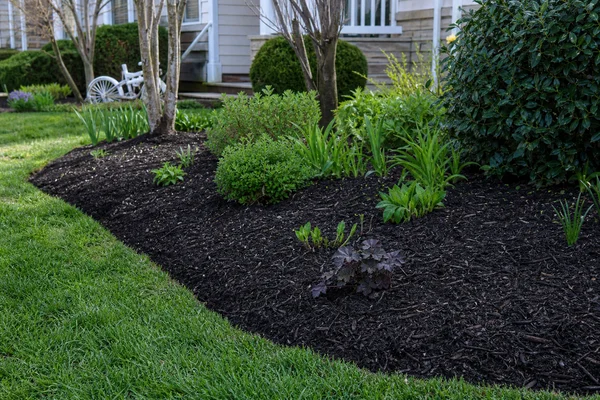
Mulching Project Gallery
Try Our Irrigation System Calculator
Estimate irrigation installation costs and seasonal water usage for your landscape.
Hartford County Customers on Our Mulching
"Annual mulch refresh through Landscaping Hartford. The beds look incredible every spring and the edging they do first makes the borders look razor sharp. Highly recommend."
Diane T.
West Hartford
"They coordinated our irrigation startup the same morning as the mulch install. One crew visit, one invoice, and both jobs done before noon. So much easier than calling two companies."
Paul M.
Rocky Hill
Mulching FAQs
How much mulch does a typical Hartford property need?
What is the correct mulch depth?
How often should mulch be refreshed?
Do you install irrigation systems?
Which mulch color lasts longest?
Mulching Guides
In-depth answers to the most common questions about mulching in Hartford County.
Ready to Book Mulching?
Free written estimate within 24–48 hours. Fixed pricing, no surprises.