7 Signs It's Time to Hire a Professional Lawn Service
Patchy turf, missed mowings, rising weeds, compacted soil, equipment costs, lost weekends. When the math stops working for DIY lawn care.
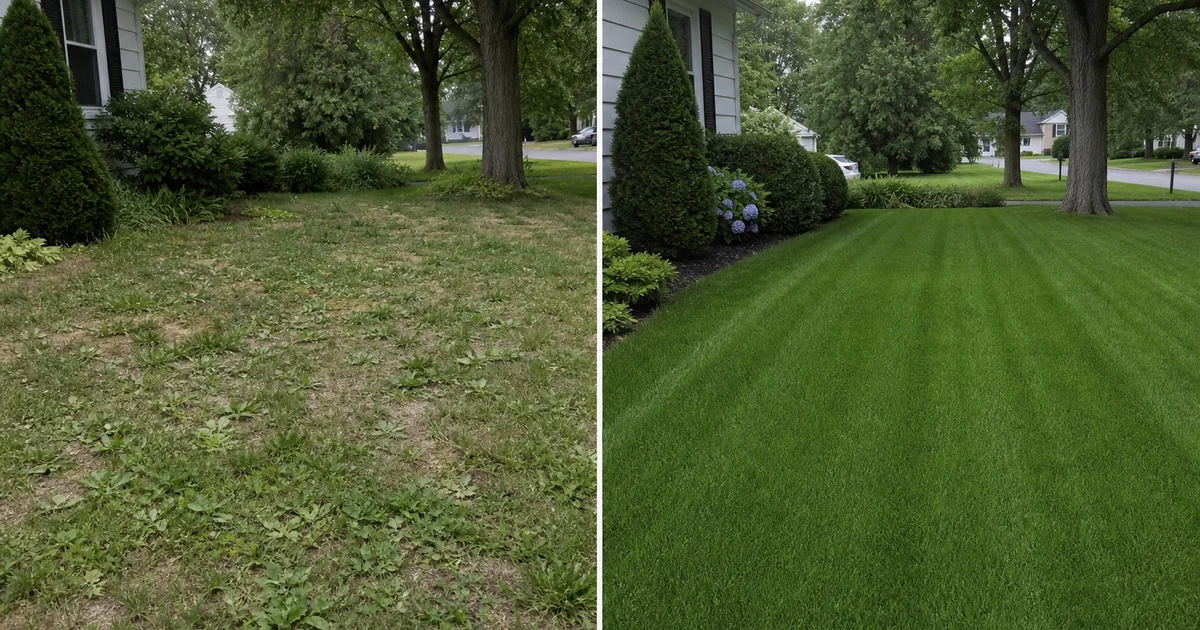
Most property owners handle their own yard work until a specific trigger forces a change. It might be a back injury, a new commute, an expanding family schedule, or the realization that the lawn has been slowly declining despite steady effort.
The transition point usually arrives quietly. One of the signals below starts showing up, then two more follow, and the weekend chore that used to take an hour now dominates Saturday mornings.
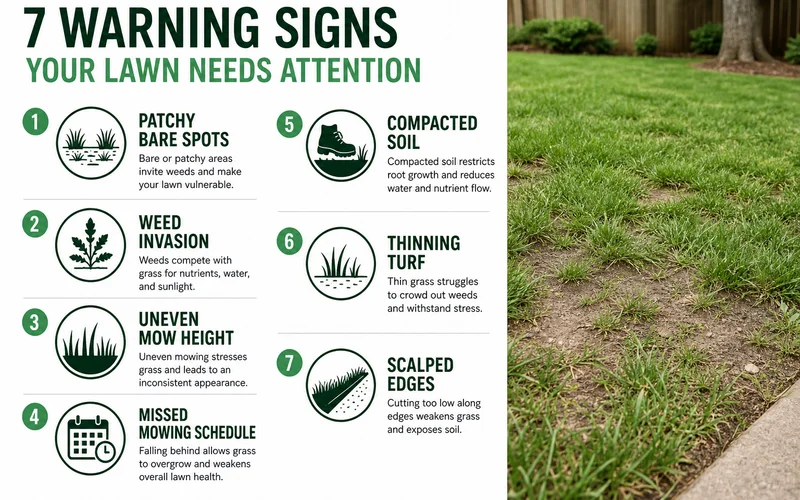
Here are the seven most common indicators that it is time to bring in professional help.
1. Bare Spots and Thinning Grass
Visible patches where grass refuses to fill in usually signal an underlying soil problem rather than a watering or mowing issue. Ignoring thin sections allows the surrounding soil to degrade further each season, and the bare spots expand.
The fix requires a sequenced approach spanning a full growing season:
- Soil testing to identify exact pH and nutrient gaps. The UConn Soil Nutrient Analysis Lab runs standard tests for about $12.
- Core aeration to break compacted soil and create seed-to-soil contact.
- Overseeding with resilient grass varieties suited to Zone 6b conditions.
- Timed fertilization at specific intervals to establish deep roots in the new growth.
Guessing on products without soil test data wastes money and delays the recovery.
2. Mowings That Keep Getting Skipped
When one missed week becomes two, the turf takes a harsh rebound cut that shocks the plant. USDA scientists established the one-third rule decades ago: never remove more than one-third of the blade height in a single session. Cutting a six-inch blade down to two inches halts root growth and opens the door to weed invasion.
The required mowing cadence shifts through the season:
- Spring peak growth: Every four to five days.
- Summer heat dormancy: Every seven to ten days.
- Fall recovery flush: Back to weekly to manage both grass growth and leaf drop.
3. Weeds Gaining Ground
Crabgrass spreading across thin patches, dandelion clusters expanding, and clover taking over shaded areas all indicate that the turf has lost competitive density. Once aggressive weeds establish in bare spots, they accelerate the decline of surrounding healthy grass.
Pre-emergent herbicides must go down before soil temperatures reach 55 degrees Fahrenheit, which typically happens in late April across Hartford County. Missing that window by even a few days renders the treatment useless because crabgrass seeds have already germinated.
| Weed | Treatment Approach | Critical Timing |
|---|---|---|
| Crabgrass | Pre-emergent soil barrier | Before soil reaches 55 degrees |
| Dandelion | Post-emergent spray | Early spring during active leaf growth |
| Clover | Targeted broadleaf control | Late spring or early fall |
4. Water Pooling and Hard-Pack Soil
Water sitting on the surface after rain, brown patches despite regular watering, and soil that feels like concrete are classic compaction symptoms. Clay soils compact easily under foot traffic, especially near driveways and play areas.
Commercial core aerators pull plugs three-quarters of an inch wide and up to three inches deep. Iowa State University extension research indicates that 20 to 40 holes per square foot are necessary to genuinely improve water and oxygen penetration to the root zone.
Attempting to fix compacted clay soil by simply watering more frequently encourages fungal diseases rather than deep root growth.
5. The Real Cost of Owning Equipment
A reliable residential mower costs between $700 and $2,000. Add a string trimmer for $200, a leaf blower for $150, plus fuel, oil, spark plugs, blade sharpening, and storage space. The annual total surprises most homeowners.
| Expense Category | Annual DIY Cost | Professional Equivalent |
|---|---|---|
| Mower depreciation and maintenance | $150 to $300 | Included in weekly rate |
| Handheld tools (trimmer, blower) | $75 to $100 | Included in weekly rate |
| Fuel, oil, and consumables | $50 to $100 | Included in weekly rate |
When you total the annualized equipment costs, the gap between DIY and professional service narrows significantly for many properties.
6. Weekends Disappearing Into Yard Work
A standard residential yard takes 1.5 to 3 hours of manual effort every week when you account for mowing, trimming, edging, and the final blow-down. The Bureau of Labor Statistics found that Americans who do yard work spend an average of two hours per session. Across a 20-week mowing season, that translates to 40 hours of summer weekends spent on the lawn.
The time breakdown per visit:
- Mowing and bagging: 45 to 60 minutes.
- String trimming perimeters: 20 to 30 minutes.
- Edging driveways and walks: 15 to 20 minutes.
- Blowing debris and cleanup: 10 to 15 minutes.
Reclaiming those 40 hours is often the deciding factor when homeowners make the switch.
7. Turf Stress You Cannot Diagnose
Browning patches, circular fungus patterns, sudden insect damage, and unexplained die-off all signal stress that is difficult to identify without training. Applying the wrong product wastes money and often worsens the underlying problem.
Circular light-brown patches bordered by dark rings frequently indicate Rhizoctonia solani, commonly known as brown patch fungus. This disease thrives during humid summer nights when temperatures stay above 65 degrees and requires entirely different treatment than insect damage or drought stress.
A professional assessment replaces guesswork with targeted intervention:
- Visual diagnosis to identify specific fungal strains or pest species.
- Targeted treatment using the exact product needed for the confirmed issue.
- Schedule adjustment to alter watering frequency and prevent future outbreaks.
When to Make the Call
If two or three of these signals are showing up on your property, the DIY approach has likely passed the point of diminishing returns. Landscaping Hartford provides free written estimates within 24 to 48 hours of an on-site visit.
Securing a spot on a weekly lawn maintenance plan is the starting point for consistent, reliable care that protects your property value and gives you your weekends back.
Related Service
Learn more about Lawn Mowing & Maintenance in Hartford
Ready to book? Get a free written estimate for lawn mowing & maintenance in hartford from our Hartford County team.
Visit the Lawn Mowing & Maintenance in Hartford Page